Tag

Italy

Condotti Street

By Monuments No Comments

Condotti Street

Condotti Street

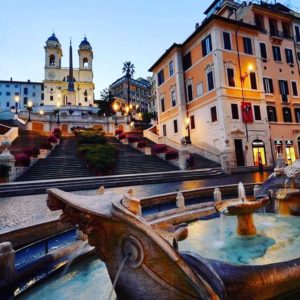
Condotti Street, known simply as via Condotti, is one of the best known streets in Rome.

Located in the northern area of ​​the historic center (the so-called Trident), it connects Corso Street to Spanish Steps – Gabbia Services

Origins

Opened in the first half of the sixteenth century under the pontificate of Paul III Farnese and continued under Julius III.

The street, so called because it led (and still leads) to Trinità dei Monti, also included Fontanella di Borghese  Street and  Clementino Street.

Trinitatis Street

Street Before assuming the mystical name of “Trinitatis Street”, this road, albeit in a reduced format, must certainly have been part of that modest road complex that descended from the Horti Luculliani towards the lower area of ​​Campo Marzio.

As proof that our road followed the layout of an ancient Roman road, a stretch of paving was discovered at the corner with Corso Street

In the Middle Ages, various houses of little importance formed a first urban fabric in the street, which was defining itself after centuries.

Precisely between the fifteenth and sixteenth centuries, a period followed by the Baroque phase that still appears today.

Despite the transformations made in the modern phase (19th and 20th centuries).

Why Condotti Street?

The “Trinitatis Street” assumed the current name of the Condotti when Pope Gregory XIII made the conduits (in Latin “ductus”) of the Acqua Vergine pass underground.

According to the legend, however, the term “condotti” derives from the Latin “ducti”, but in the sense of “led, led”,

with reference to Agrippa’s soldiers who in 19 BC, thirsty, were “led” by a girl (in Latin “virgo”) to the source of the water, which was given the name of Acqua Vergine.

Condotti Street, Today.

The street today is known by tourists from all over the world as the favorite destination for luxury shopping.

In fact, it constitutes a catwalk of prestigious fashion houses and prestigious brands, where Giorgio Armani, Michael Kors, Salvatore Ferragamo, Hermès, Prada, Dior, and Dolce & Gabbana have their best boutiques.

Gabbiaservices

The Colosseum

By Monuments No Comments

The Colosseum

The Colosseum

The Colosseum, originally called the Flavian Amphitheater, stands in the archaeological heart of the city of Rome.

Origins

The amphitheater was built in the Flavian period on an area on the eastern edge of the Roman Forum.

Its construction was started by Vespasian in 70 AD. and inaugurated by Tito in 80, with further changes made during Domitian’s empire in 90.

The building, known as the Colosseum because of a colossal statue that stood nearby, until the end of the ancient age, shows of great popular appeal, such as hunts and gladiator games.

The building was, and still remains today, a spectacle in itself.

It is in fact the largest amphitheater in the world, able to offer surprising scenographic equipment, as well as services for the spectators.

Able to hold an estimated number of spectators between 50,000 and 87,000.

It is the most important Roman amphitheater, as well as the most imposing monument of ancient Rome that has come down to us.

Symbol of the glories of the empire, the Amphitheater has changed its face and function over the centuries, offering itself as a structured space but open to the Roman community.

Colosseo – Wikipedia

Dimensions

Building forms an ellipse of 527 m in perimeter, with axes measuring 187.5 and 156.5 m.

The arena inside measures 86 × 54 m, with an area of ​​3 357 m².

Current height reaches 48.5 m, but originally it reached 52 m.

Decline

In 438 with the abolition of gladiator games at the behest of Valentinian III the amphitheater undergoes a slow and progressive decline so much so that it was used in the Middle Ages and the Renaissance as a quarry for materials,

also used for the construction of St. Peter’s Basilica,

and as shelter for animals and home for craft workshops and homes,

while the process of its Christianization is long.

From the romantic period in which the charm of the ruin attracted writers and artists,

it soon passed to that of systematic excavations and restorations.

Today

Today the Amphitheater is a monument to the works of human ingenuity that survive the time and still presents itself as a welcoming and dynamic structure that offers a wide overview of the interior spaces, but also evocative views of the city when you look out from the external archways.

It periodically hosts temporary exhibitions related to the themes of antiquity and its relationship with the contemporary, as well as modern shows.

This result of events and experiences has made the Amphitheater a place that is renewed every day, meaningful for everyone and capable of telling everyone a story.

Rome is not just a city, but an open-air history book …

Navona Square

By Squares No Comments

Navona Square

Piazza Navona. Il più Celebre Capolavoro del Barocco a Roma

Navona Square is one of the most famous monumental squares in Rome.

Origins

In ancient times, it was born as, the “Domitian Stadium” built at the behest of Domitian, perhaps even before 86 AD, to serve the Greek athletic games, which he particularly appreciated, but which the Romans did not like, considering them immoral.

Dimensions

The structure has a length of 265 meters and a width of 106.

Birth of Navona Square

The life of Navona Square began only in the mid-fifteenth century, at the behest of Innocenzo X, of the Pamphili family, who had the buildings that now surround the square built, occupying where the tiers were previously.

It took the place of the ancient Domitian Stadium, becoming a fixed point of sale for vegetables, meats and various goods.

Place of market and meeting, the square also became the place of parties and processions.

Navona Square is a symbol of Baroque Rome, with architectural and sculptural elements by Gian Lorenzo Bernini.

Piazza Navona – RomaSegreta.it

The Fountains

Famous work of Benini is the Fountain of the Four Rivers in the center of the square, which represents the Danube, the Ganges, the Nile and the Rio della Plata, that is the four corners of the earth.

Two other fountains rise inside the square, Moro Fontain, located on the southern side which represents three dolphins holding up a snail, from which a jet of water splashes,

and Nettuno Fontain , which represents Neptune with the trident. defending itself from an octopus.

Navona Square today.

Today the square is surrounded by clubs, bars and restaurants, where you can sip a coffee while admiring the wonders of the square.

It is located a stone’s throw from the beautiful Campo dè Fiori Square, still famous today where the local market takes place every morning.

Also nearby is the majestic Farnese Square, site of the French embassy.

Behind the square stands the imposing monument of the Pantheon.

During the Christmas period, with the feast of the Epiphany, the square is filled with stalls, toys, as if not wanting to abandon the joy that has characterized the square for centuries.

Gabbiaservices

Limousine Service Rome

By Limousine service No Comments

Limousine Service Rome

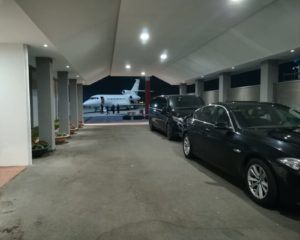
Limousine service

Limousine service, or rental service with driver (NCC), has ancient origins.

It is a non-scheduled public transport service.

Noleggio con conducente – Wikipedia

It is aimed at specific users, who make a specific request for a specific transport without a time limit at the carrier’s headquarters, with the possibility of variation and / or integration during the trip.

The cars used to carry out the rental service with driver are Mercedes-Benz luxury cars.

Limousine service roma

Unlike taxis, which stop in specifically marked public areas, the NCC service is aimed at undifferentiated users.

It can carry out the service throughout the national and international territory.

But who is such an exclusive service aimed at?

Generally, the users who prefer this service are business men who need to reach workplaces quickly and professionally with official cars.

Cars that can remain at their disposal for any need.

There are also many tourists who turn to the Limousine service for their holiday.

The advantage for a tourist is to have a driver available for the duration of their stay who can accompany them with personalized tours among the beauties of the city, who can welcome them and accompany them back to the airport, becoming a reference and trusted person.

Many Event and Meeting Organization Companies turn to the rental service with driver for the transfers of their customers from receptive places such as airports and stations to the location of the conference or gala event.

Book your service!

You will have a car at your complete disposal, equipped with all possible comforts, driven by professional drivers in dark suits who will fulfill all your requests.

Gabbiaservices

Home – Gabbia Services

The Lazio coast is the new surfing paradise

By The Lazio coast No Comments

The Lazio coast is the new surfing paradise

The Lazio coast is the new surfing paradise

The beaches of the Lazio coast are considered by surfers as a paradise.

Ostia and Torvajanica, in particular, which are two towns within walking distance of Rome, are popular destinations for surfers.

The sport of surfing in recent years has become more and more practiced by adults and children, and there are numerous surf schools born on the beaches of Ostia, Torvajanica and Santa Marinella.

The Lazio coast is the new surfing paradise

To say it loudly in one of its articles is the prestigious Financial Times newspaper.

From Torvajanica to Ostia, from Fregene to Cerenova, Santa Marinella and Circeo.

Italian new wave: the top surfing spots only a short hop from Rome | Financial Times (ft.com)

The British newspaper dedicates a long article to the wonders of the Lazio waves.

The newspaper writes: “When international travelers come to Rome, they usually don’t pack a surfboard along with glasses, straw hat and camera.

This part of Italy, with all its art plus food and its breathtaking views, it is not a logical surfing destination.

Yet just outside the city there is a long beach exposed to the long waves that come from all directions and which, on the right days, gives a lot of fun. “

When you plan your next trip and you want to come and see the beauties of Rome, bring a nice costume with you, it will definitely be worth it.


The Mausoleum of Augustus

By Monuments No Comments

The Mausoleum of Augustus

the mausoleum of augustus

Back to its former glory: reopened to the public after 14 years

Closed for fourteen years for the archaeological investigations preliminary to the realization of the recovery and restoration project, from today, 02 March 2021, the Mausoleum of Augustus is again open to the public.

Already sold out until April, to visit the imposing building, you need to book.

Mausoleo di Augusto: dopo 14 anni riapre il monumento di Roma – la Repubblica

Dimensions

Built in 28 BC , the funerary monument for Augustus and his family, with an overall diameter of almost 90 meters and an assumed height of 45, is the largest circular tomb in the ancient world.

Important were the restoration operations that brought the monument back to its splendor.

Cost of the restoration operations € 4,275,000.

The building, also known as Augusteo, is located in Piazza Augusto Imperatore, in the Campo Marzio district.

Rioni di Roma (romatoday.it)

It is located in the historic center of Rome, a stone’s throw from the luxury shopping of  Condotti street and  Babuino street.

Very close is also the much loved Spanish Steps.

Spanish Steps – Gabbia Services

Book your visit, do not deprive yourself with the arrival of the beautiful season, of a walk through the streets of ancient Rome, where even today you can savor the history that made the city so famous.

Pantheon

By Monuments No Comments

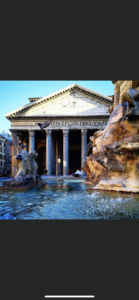
The Pantheon is a building of ancient Rome, located in the Pigna district in the historic center.

Built as a temple dedicated to all past, present and future deities, it was built in 27 BC. from the harpinate Marco Vipsanio Agrippa, son-in-law of Augustus.

It was rebuilt by the emperor Hadrian between 120 and 124 AD, after the fires of 80 and 110 AD. they had damaged him.

At the beginning of the 7th century it was converted into a Christian basilica, called Santa Maria della Rotonda.

  • Italiano


Privacy Policy Cookie Policy