Tag

Monuments

The Janiculum

By Monuments, Squares, Uncategorized No Comments

The Janiculum

Il Giancilo-gabbiaservices

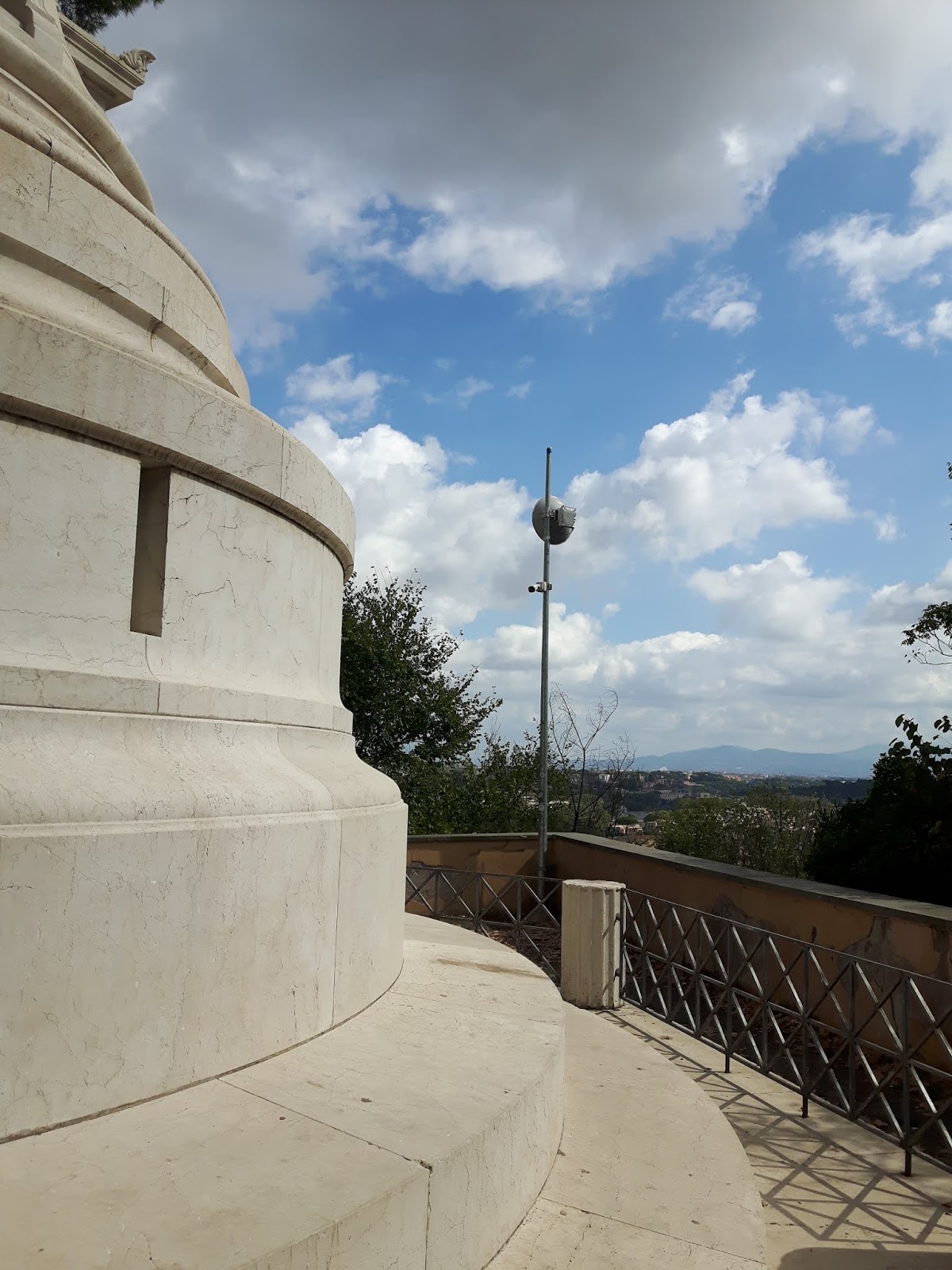
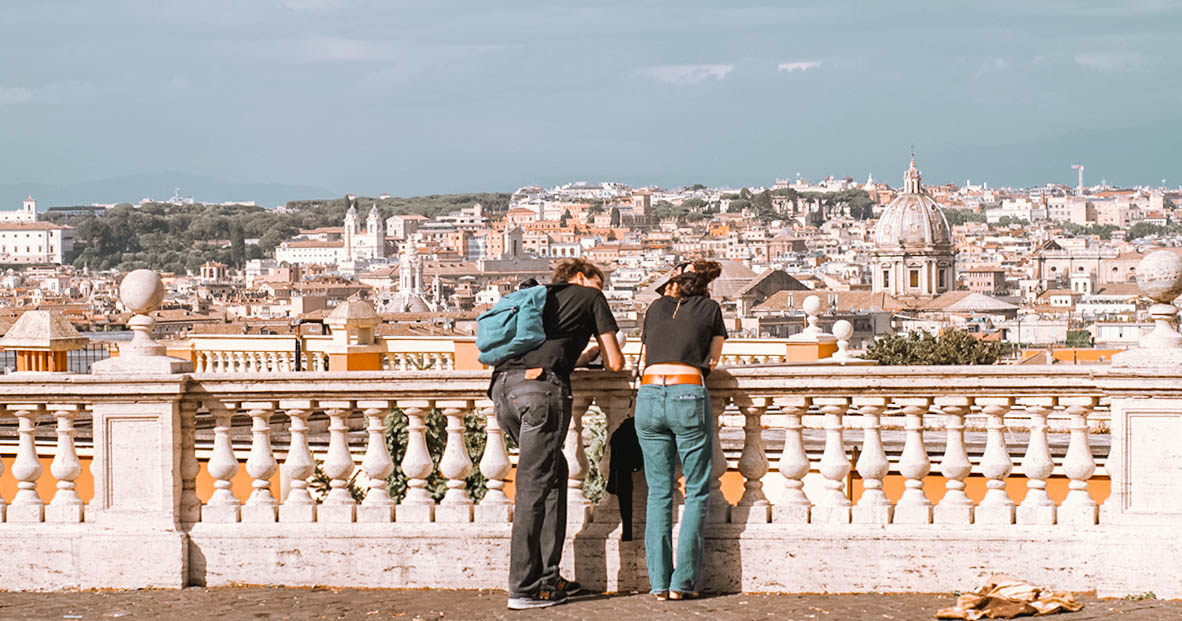
The Janiculum, considered the eighth hill of Rome, is a pleasant place to stroll, enjoying the extraordinary views of the city.

It became very popular for  to the important historical role it occupied in defending the city.

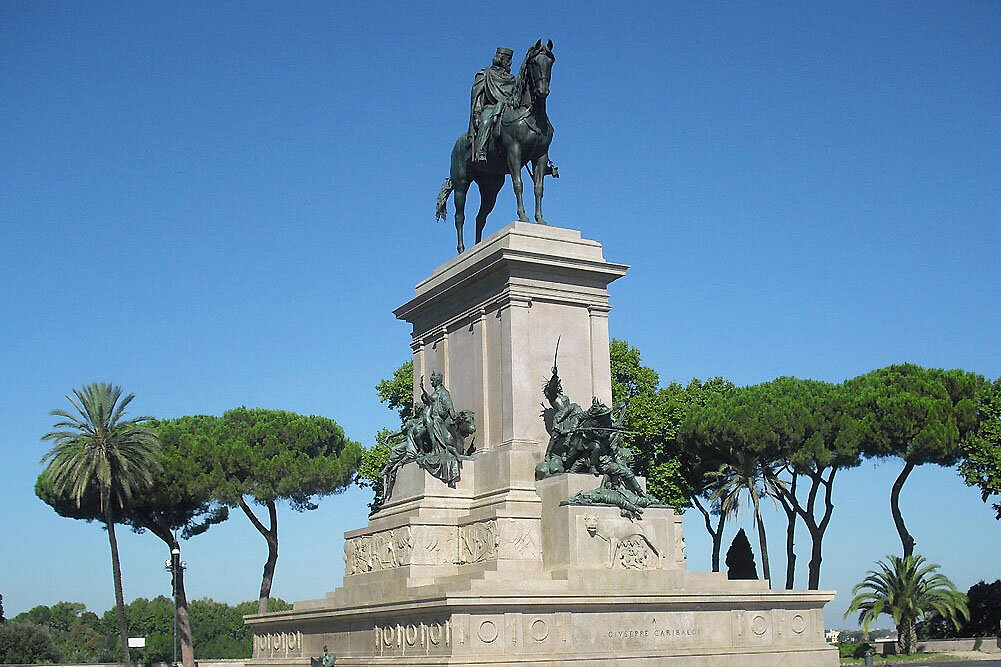
Having become the scene of the battle in which Garibaldi fought the French troops, its summit is now full of sculptures in homage to the Italian patriot.

What to see in the Janiculum area

The Janiculum is a very pleasant area for walking, with its cheerful environment, away from the chaos of the city.

Usually there are activities for children, such as puppet shows or pony rides.

These are some of the most interesting places to visit in the area:

The Fountain of Acqua Paola 

La Fontana dell'Acqua Paola – Michelangelo Buonarroti è tornato

Fontanone del Gianicolo-gabbiaservices

The Fountain of Acqua Paola:

also called Fontanone, in Roman jargon: It is a monumental marble fountain, created in the 17th century to celebrate the reopening of the ancient Roman aqueduct.

Manfredi lighthouse

IL faro Manfredi - gabbiaservices

Faro Manfredi-gabbiaservices

Faro Manfredi-gabbiaservices

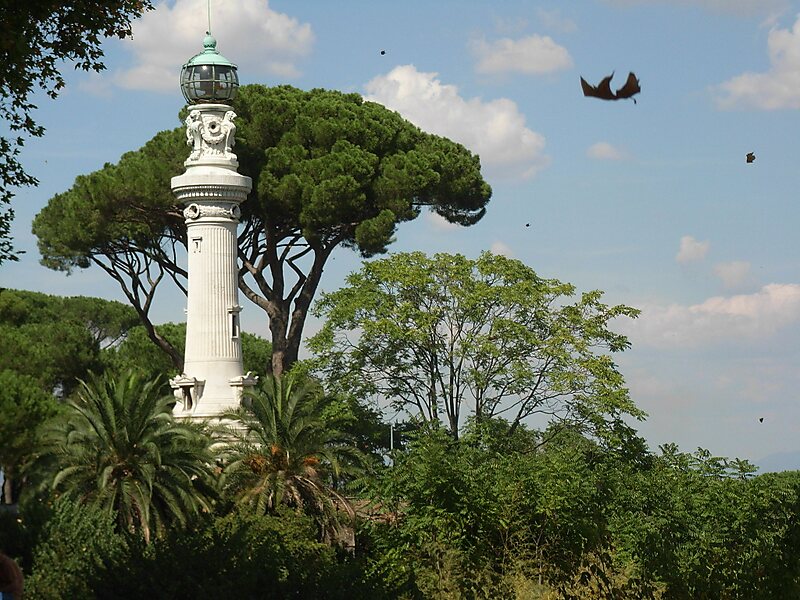
Manfredi lighthouse:

the beautiful lighthouse built in 1911 was a gift from the Italians who emigrated to Argentina.

Church of San Pietro in Montorio
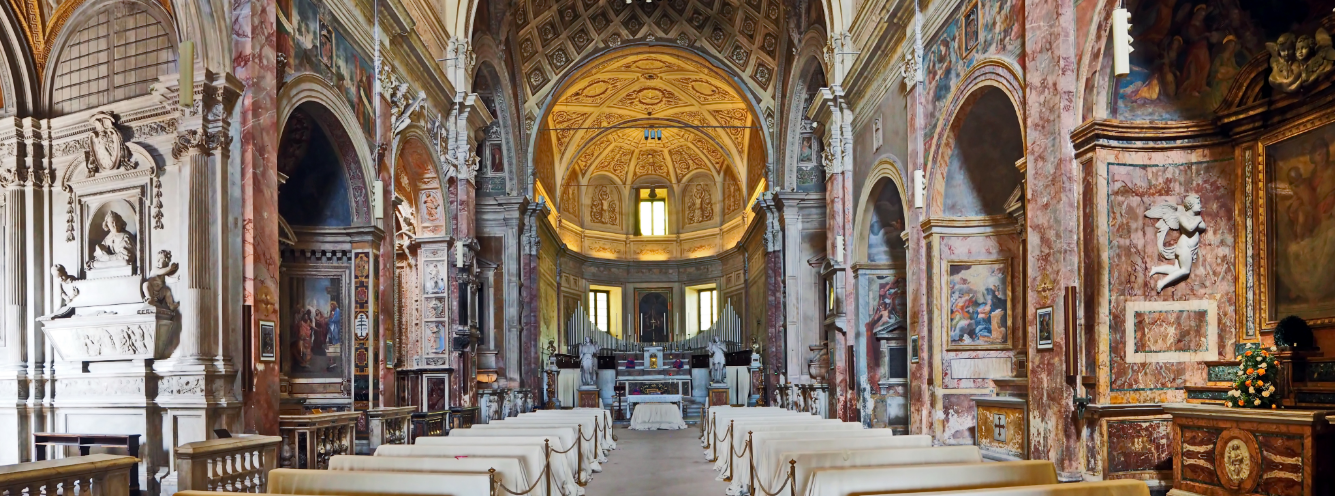
 La chiesa di San Pietro in Montorio -gabbiaservices

Il Tempietto di San Pietro in Montorio - gabbiaservices

San Pietro in Montorio-gabbiaservices

Roma La chiesa di San Pietro in Montorio-gabbiaservices

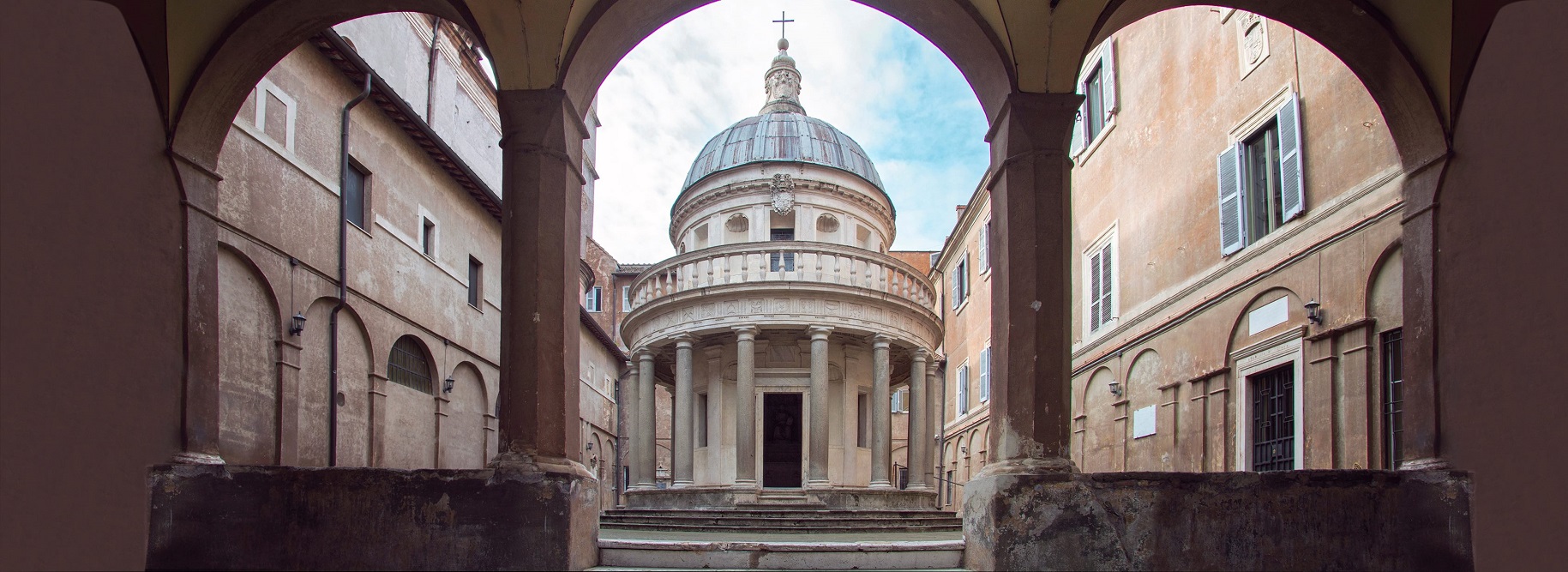
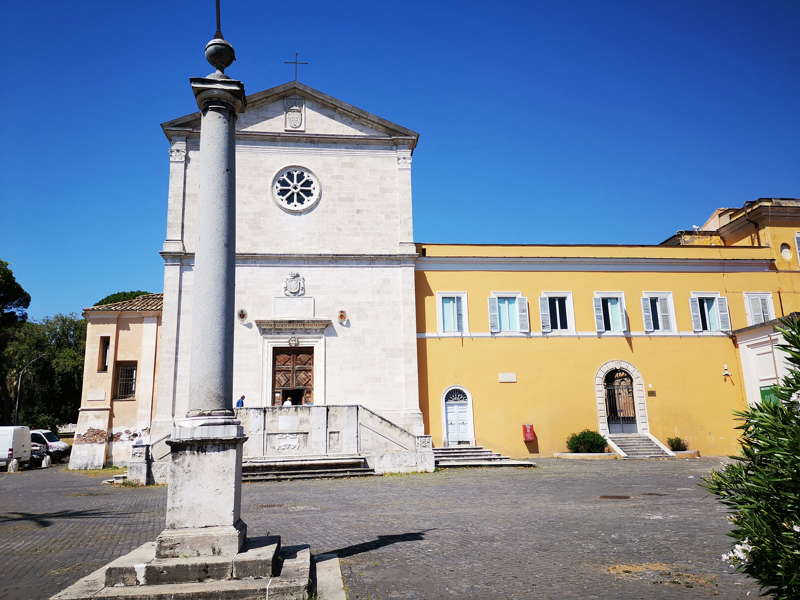
Church of San Pietro in Montorio:

Part of a Franciscan monastery, the church remained open to the public until today. In its courtyard is the Tempietto di Bramante, a small temple erected in the place where St. Peter was crucified.

It is a favorite destination for many, to celebrate their wedding, thanks to the splendid view of the whole city that it offers.

Garibaldi statue

Statua garibaldi-gabbiaservices

La storia della statua di Anita Garibaldi al Gianicolo-gabbiaservices

Monument to Garibaldi:

The bronze equestrian statue depicting Garibaldi is part of the park that commemorates the resistance on the Janiculum Hill against the French army in 1849.

In the splendid setting of the Janiculum there is also the Banbin Gesù hospital, owned by the Vatican City.

Its fame for the care of pediatric and neo-infantile patients is a source of pride all over the world …

Visualizza immagine di origine


gabbiaservices

Farnese Square

By Monuments, Squares No Comments

Farnese Square


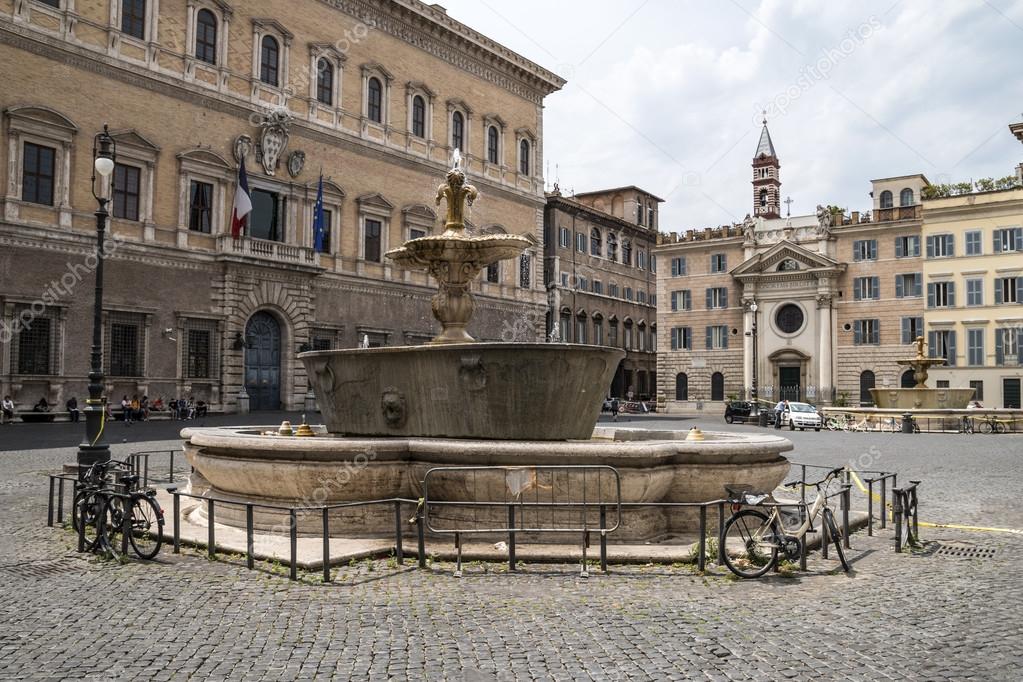
Piazza Farnese-gabbiaservices

The square takes its name from the imposing Farnese Palace.

Farnese Palace

Visualizza immagine di origine

The Palace was built for Cardinal Alessandro Farnese by the greatest artists of the time.

Let’s talk about, Antonio da Sangallo Il Giovane, Michelangelo Buonarroti, Jacopo Barozzi called Vignola and Giacomo Della Porta.

The square began to be so named when the aforementioned Cardinal Farnese bought the houses of Cardinal Ferritz and others that he demolished, to make it a square where he built his splendid residence.

The palace was begun in 1514 on designs by Antonio da Sangallo Il Giovane.

Subsequently, both for the election of the cardinal as pontiff (Paul III) in 1534 and following the death of Sangallo (1546), the work was continued by Michelangelo.

Michelangelo, defined the layout of the first two floors,

he erected the third and embellished the façade with the central balcony and the splendid projecting cornice.

The material used for the construction of the palace was taken from the ruins of Ostia and those of the “Temple of the Sun”.

The travertine used was that from the quarries of Tivoli, while the beams for the ceilings of the palace, of exceptional proportions, were brought from the woods of Carnia.

It was nicknamed “the dice” for its square size, but it is also considered one of the four wonders of Rome.

In 1874 the French Embassy took up the palace through a lease with the Bourbons.

gabbiaservices

Purchased by France in 1911, the palace was resold to the Italian State in 1936, the year in which the two States signed an agreement to lease the two embassies,

the Italian one in Paris and the one French in Rome, for 99 years with emphyteutical rent.

The Fountains of Farnese Square

gabbiaservices


In the square there are also two beautiful fountains, consisting of two Egyptian granite tanks from the Baths of Caracalla.

In 1545 Paul III Farnese had one transported in front of his palace.

At the center of the then  Del Duca Square (today Farnese), it was brought only for ornamental reasons as there was not enough water to feed the fountain.

In 1580 Cardinal Alessandro Farnese obtained permission from Pope Gregory XIII to take the second,

both still with a purely ornamental function.

It was Girolamo Rainaldi in 1626 who adapted them to fountains.

He attached them to the condes of the Acqua Paola, after Cardinal Odoardo Farnese obtained from Pope Gregory XV 40 ounces of water for the realization of the work.

The two pools are decorated with lion protomes and with relief rings and resting on as many travertine pools.

They have in the center two cups that support the Farnese lilies (originally in travertine, then redone in marble in the restoration work of 1938) from which gusps of water rise.

The square was long used as a space used for the organization of tournaments, bullfights and popular festivals.

Church of Santa Brigida in the heart of Farnese Square

On the right side of the square there is a building complex consisting of the church of Santa Brigida.

Del Gallo of Roccagiovine Palace

Another civil architecture that ennobles the square is Del Gallo of Roccagiovine Palace, today home to a lucky few.

What makes this palace unique is the magnificent staircase in the courtyard.

gabbiaservices

Farnese Square together with Campo Dé Fiori Square, both adjacent, are considered as favorite destinations for Romans and tourists for a walk.

Rich in clubs and restaurants, they are the best choice to spend an evening full of fun admiring, between a glass of wine and a plate of pasta, the history that characterizes them.

Pantheon

By Monuments No Comments

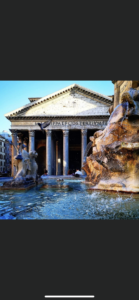
The Pantheon is a building of ancient Rome, located in the Pigna district in the historic center.

Built as a temple dedicated to all past, present and future deities, it was built in 27 BC. from the harpinate Marco Vipsanio Agrippa, son-in-law of Augustus.

It was rebuilt by the emperor Hadrian between 120 and 124 AD, after the fires of 80 and 110 AD. they had damaged him.

At the beginning of the 7th century it was converted into a Christian basilica, called Santa Maria della Rotonda.

  • Italiano


Privacy Policy Cookie Policy